
How to Unclog an RV Toilet (Without Wrecking Your Black Tank)
An RV toilet clog isn’t subtle. One flush works fine, the next one backs up, and suddenly your holding tank situation is very immediate. The good news: most RV toilet clogs have three possible causes, and two of them you can clear yourself in under an hour.
This guide covers the three clog types, how to diagnose which one you have, the right tools and methods to clear each, what not to do (a lot of popular advice makes things worse), and when you need a pro.
Three Types of RV Toilet Clogs
1. The Pyramid Plug
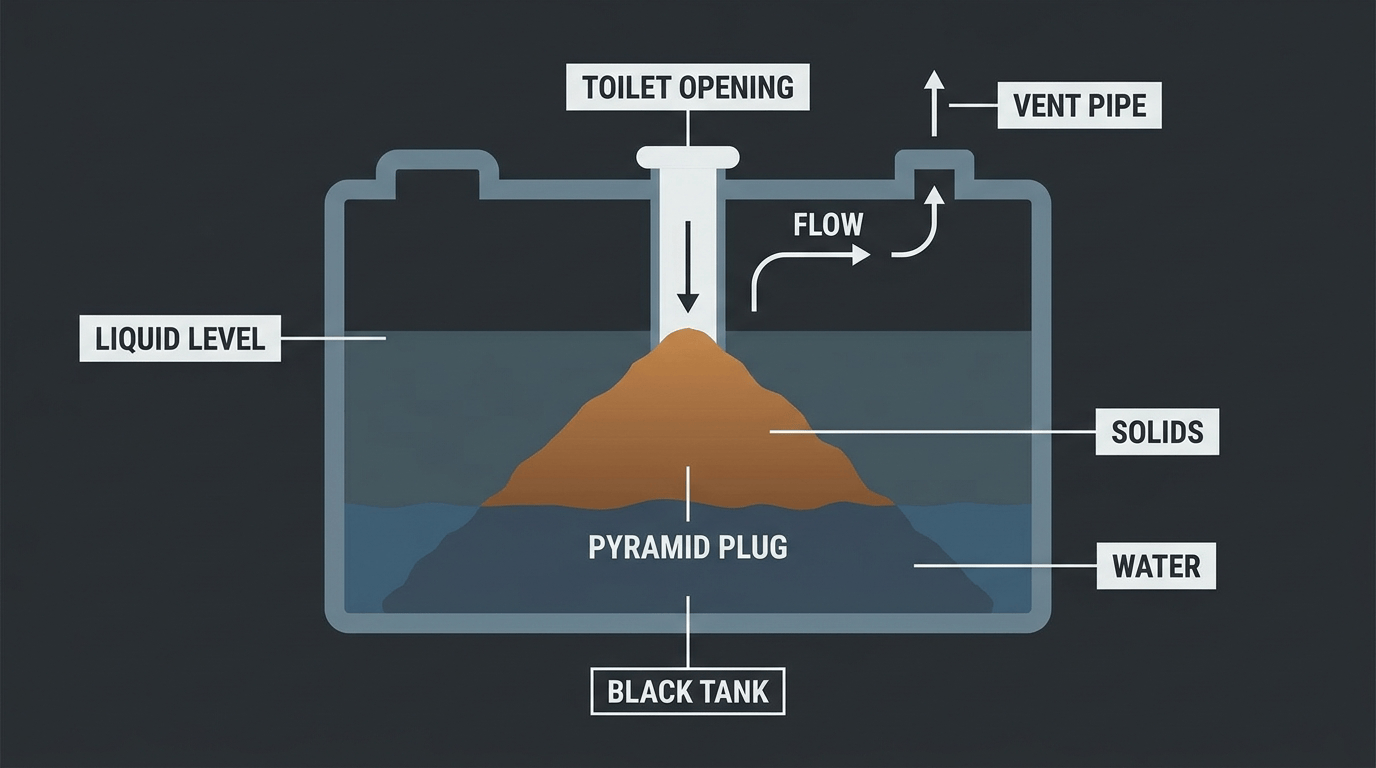
This is by far the most common RV-specific clog, and it’s a direct result of how most people use their black tanks. Leave the black tank valve open when connected to sewer at a campground and liquids drain constantly while solids accumulate into a growing cone-shaped pile directly under the toilet — a pyramid plug.
Signs of a pyramid plug:
- Toilet flushes but waste doesn’t drop — it sits in the bowl
- The clog is solid (dried waste), not soft
- You’ve been running with the black tank valve open at a hookup site
2. Full or Solidified Tank
A tank that’s too full, or has solidified waste from improper treatment, can block the connection between the toilet and tank or prevent flushing entirely.
Signs:
- Black tank reads full but shouldn’t be — sensors may be coated
- Tank won’t drain properly even with valve open
- Slow flush developed over time, not a sudden blockage
3. Vent Pipe Blockage
The black tank has a vent pipe running up through the roof to release gases and allow airflow for flushing. If blocked (leaves, nests, ice), you’ll get slow flushing, gurgling, or backup — even when the tank isn’t full.
Signs:
- Gurgling sounds when flushing
- Sewer smell inside the RV even when the tank isn’t full
- Slow flushing when tank is far from full
How to Clear Each Type
Clearing a Pyramid Plug
Method 1 — Hot water soak (try first)
- Close the black tank valve if it’s been open
- Add 3–4 gallons of hot (not boiling) water through the toilet
- Add a commercial enzyme treatment like Camco TST or Unique Digest-It
- Let it sit 12–24 hours — the heat and enzymes break down the plug
- Flush repeatedly, then open the tank valve to drain
Method 2 — Tank wand (most effective for solid plugs)
A flexible tank rinser wand ($20–$40) connects to a garden hose and reaches inside the toilet opening to break up the plug with water pressure.
- Connect wand to a hose and insert through the toilet opening
- Turn water on at low pressure and work the wand to break up the plug
- Once broken up, run more water to flush material into the tank
- Open the tank valve and drain
What not to use: A standard household plunger. The vacuum pressure can damage the blade seal and the rubber toilet seal. Use a wand or chemical treatment instead.
Clearing a Full or Solidified Tank
- Fill the tank with water through the toilet until it’s 2/3 full
- Add a heavy-duty breakdown treatment (Unique RV Digest-It or similar)
- Let it soak 24–48 hours. Drive around — vehicle movement sloshes the water and helps break things up
- Drain and repeat if needed
Extreme cases: if the tank is genuinely solid and won’t break down, hydro-jetting (some mobile techs and septic services offer it) can clear it. Budget $200–$500.
Clearing a Vent Pipe Blockage
- Get on the roof and locate the tank vent pipe (usually 1.5” ABS pipe near the rear)
- Look inside with a flashlight for nests, leaves, or debris
- Run a plumber’s snake or garden hose down the vent to clear it
- Flush water down to confirm it’s clear. Install a vent cap to prevent recurrence.
Cost to Have It Done
| Service | DIY Cost | Pro Cost |
|---|---|---|
| Pyramid plug — enzyme treatment | $10–$25 | N/A (DIY only) |
| Pyramid plug — wand clearing | $20–$40 (wand) | $100–$200 |
| Tank flush and breakdown | $15–$50 (chemicals) | $150–$350 |
| Hydro-jetting (solidified tank) | Not available DIY | $200–$500 |
| Vent pipe clearing | $0–$20 | $100–$200 |
Prevention: The Right Way to Use the Black Tank
- Never leave the black tank valve open when hooked up. Keep it closed until 2/3 full, then dump. This is the single most important habit for preventing pyramid plugs.
- Use plenty of water with every flush. Hold the pedal 5–10 seconds. Water is the primary solvent for black tank contents.
- Use RV-specific or single-ply toilet paper. Standard 2-ply household paper is a frequent contributor to clogs.
- Add a few inches of water to the tank before your first use of each trip to prevent waste from drying to the tank floor.
- Use enzyme-based treatment every dump cycle — Unique Digest-It and Camco TST both work well.
Frequently Asked Questions
Can I use a plunger on an RV toilet?
Standard plungers can damage the rubber blade seal in RV toilets. Use a wand or chemical treatment instead.
Why does my RV toilet smell even after cleaning?
Odors usually mean the vent is blocked, the blade seal is damaged (letting tank gases up), or the tank needs a deep treatment cycle. Check the vent first.
Why won’t my black tank sensor read accurately?
Sensors get coated with waste and paper residue. A full flush cycle with ice cubes plus a sensor-safe treatment (or the GEO Method: water softener plus dish soap) usually clears them.
Can I use household bleach in my black tank?
Avoid it. Bleach kills the beneficial bacteria needed to break down waste, damages seals over time, and often makes odors worse. Use enzyme-based treatments.
Bottom line: Most RV toilet clogs are pyramid plugs caused by running with the black tank valve open. Most clear in 12–48 hours with hot water and enzyme treatment. Solid plugs yield to a tank wand in 20 minutes. Vent blockages are a quick rooftop fix. The real lesson is operational: keep that valve closed, use plenty of water, and let the tank fill before you dump.
Toilet or tank beyond DIY?
Find a Lab-Vetted mobile tech near you who handles black tank and plumbing issues.