RV Furnace Not Working: Diagnosis and Repair Guide (2026)
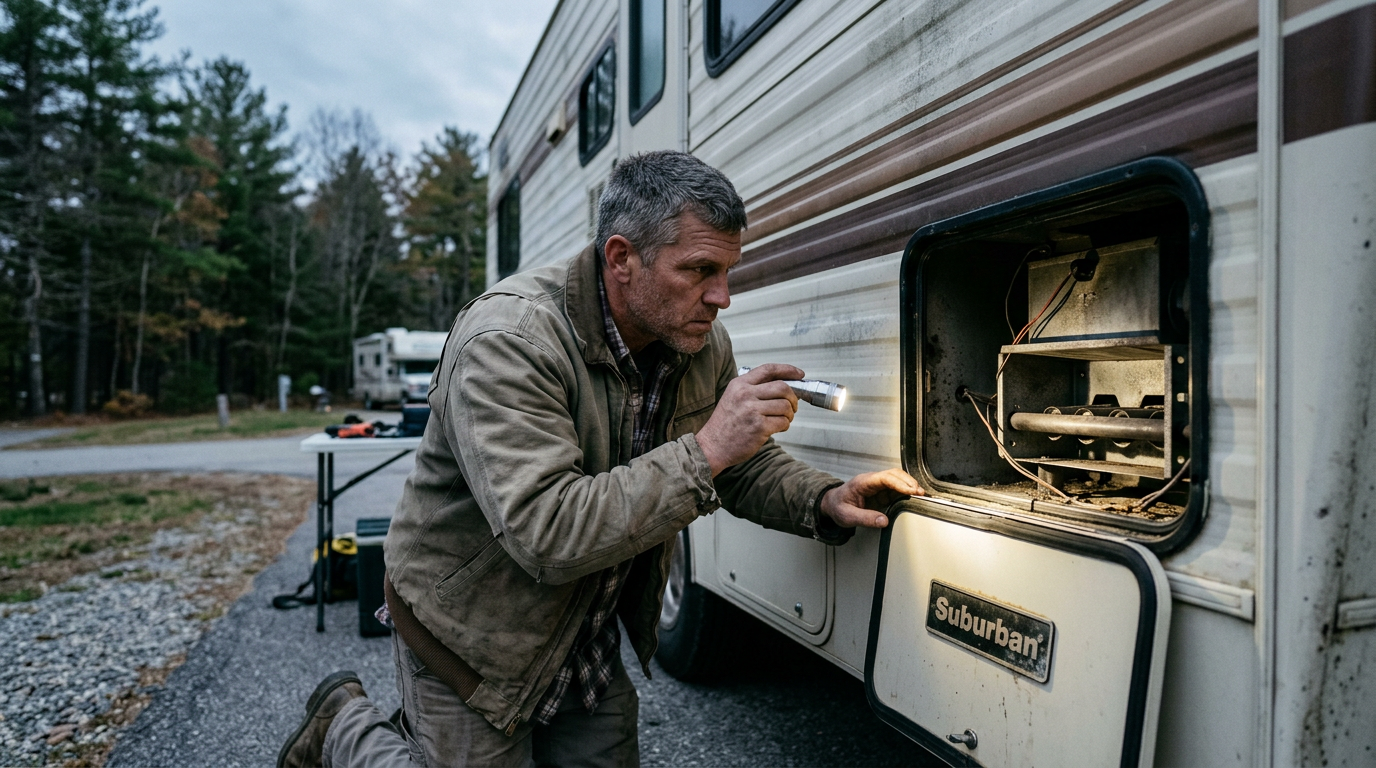
An RV furnace that won’t ignite at 6am in a cold campground concentrates the mind. The good news: most RV furnace failures follow a short list of common causes, most of them diagnosable in 20 minutes without a tech. Some you can fix yourself. Others need a service call. But knowing which is which saves time and the cost of a diagnostic visit you didn’t need.
This guide covers how RV furnaces work, the most common failure modes with their causes and fixes, and what it costs when you need a pro. Most RV furnaces are made by Dometic (formerly Atwood) or Suburban — both are covered here.
How an RV Furnace Works (Quick Version)
RV furnaces are forced-air propane heaters. When the thermostat calls for heat, here’s what happens in sequence:
- The sail switch (an airflow sensor) confirms the blower motor is running at adequate speed
- The control board opens the gas valve and activates the igniter
- The igniter sparks, propane ignites
- The flame sensor confirms ignition; the control board keeps the gas valve open
- Hot combustion gases pass through the heat exchanger; the blower pushes air across the heat exchanger and out the vents
- The thermostat is satisfied; the gas valve closes; the blower continues briefly to cool the heat exchanger
Failure at any step in this sequence produces a specific symptom. That’s how you diagnose it.
Symptom-by-Symptom Diagnosis
Furnace Does Nothing — No Blower, No Response
If there’s no response at all when the thermostat calls for heat:
- 12V power issue. RV furnaces require 12V coach power to run — even on propane. Check the furnace circuit breaker or fuse in your 12V distribution panel. Low battery voltage (below 10.5V) can also prevent operation.
- Thermostat issue. Confirm the thermostat is set to heat mode and above the current temperature. Check the thermostat’s own fuse if it has one. Try a manual override if available.
- Blown furnace fuse. Most furnaces have a fuse on the unit itself, separate from the coach panel fuse.
Blower Runs But No Ignition
You hear the blower run, maybe hear clicking (the igniter), but the furnace doesn’t light — and then the blower shuts off (a lockout cycle).
- Propane supply issue. Check that propane is on and other propane appliances work (stove, water heater). If the stove lights but the furnace won’t, the propane supply is fine.
- Blocked exterior vent. The furnace combustion air intake and exhaust vent are on the exterior of the RV — often covered by a rectangular vent cover. Mud dauber wasps nest inside these vents and completely block combustion airflow. This is extremely common. Inspect and clear the vent.
- Failed sail switch. If the blower motor isn’t spinning fast enough (dirty, failing motor), the sail switch won’t close and the sequence won’t proceed. Listen to the blower sound — is it labored or slow?
- Failed igniter. The igniter electrode can crack, shift out of position, or build up carbon deposits. Look at the burner area through the exterior vent — you should see sparking during the ignition cycle.
- Failed gas valve. The solenoid gas valve can fail in the closed position — propane never reaches the burner.
- Failed control board. The board manages the entire sequence. A failed board often presents as lockout with no clear upstream cause.
Ignites Then Shuts Off Shortly After
- Failed or dirty flame sensor. The flame sensor (thermocouple) confirms ongoing ignition. Carbon deposits on the sensor prevent it from reading the flame, and the control board shuts down the gas valve as a safety measure. Clean the flame sensor with fine steel wool or sandpaper.
- Overheating (high-limit switch tripping). If airflow through the furnace is restricted — blocked registers, dirty filter, closed vents in multiple rooms — the furnace overheats and the high-limit switch cuts it off. Ensure all registers are open and airflow is unobstructed.
- Weak propane pressure. Low tank pressure (nearly empty tank in cold weather — propane pressure drops significantly in freezing temps) can cause ignition then dropout.
Furnace Runs But Doesn’t Heat Well
- Blocked or closed heat registers in the problem area
- Dirty blower wheel reducing airflow
- Cracked heat exchanger (serious — allows combustion gases into the cabin air. Requires replacement.)
- Ductwork separation (in motorhomes with distributed ducting — heat is venting into the wall cavity)
The First Things to Check (Before Calling Anyone)
- Propane supply — is it on? Is there propane in the tank? Do other appliances work?
- 12V power — check the furnace breaker/fuse in the coach panel. Check battery voltage.
- Exterior vent — go outside and look at the furnace exhaust vent. Any blockage? Any obvious nesting?
- Lockout reset — if the furnace went through a failed ignition cycle, it may have locked out. Turn the thermostat off, wait 30 seconds, turn it back to heat. Many lockouts self-reset.
- Heat registers — are all of them open? Blocking multiple registers forces heat back into the furnace and can cause thermal shutdowns.
DIY Repairs vs. Pro Territory
DIY-friendly:
- Clearing a blocked exterior vent (nests, mud daubers) — free
- Replacing a blown fuse — $1–$5
- Cleaning the flame sensor — free
- Checking and resetting the high-limit switch (some models) — free
- Cleaning the blower wheel — free, requires disassembly
Pro territory:
- Gas valve replacement — involves live propane; proper leak testing required
- Control board replacement — requires proper diagnosis to confirm the board (and not an upstream component) is the actual failure
- Heat exchanger inspection and replacement — cracked heat exchanger is a safety issue
- Full furnace replacement — propane, electrical, and installation work
RV Furnace Repair Cost Guide
| Repair | Parts | Labor | Total |
|---|---|---|---|
| Exterior vent cleaning (mud daubers) | $0 | $100–$200 | $100–$200 |
| Sail switch replacement | $20–$60 | $100–$200 | $120–$260 |
| Igniter replacement | $30–$80 | $100–$200 | $130–$280 |
| Gas valve replacement | $100–$300 | $150–$300 | $250–$600 |
| Control board replacement | $150–$400 | $150–$300 | $300–$700 |
| Full furnace replacement (Suburban/Dometic) | $400–$900 | $300–$600 | $700–$1,500 |
Bottom line: Before you call a tech, check the big three: propane supply, 12V power, and exterior vent blockage. Mud dauber nests blocking the combustion vent are the #1 cause of summer-to-fall furnace failures and take 10 minutes to clear. If those check out and the furnace still won’t fire, you’re most likely looking at a sail switch, igniter, flame sensor, or control board — all diagnosable by a competent tech in one visit.
Need an RV furnace tech?
Find a Lab-Vetted mobile tech or RV shop near you who services Dometic and Suburban RV furnaces.