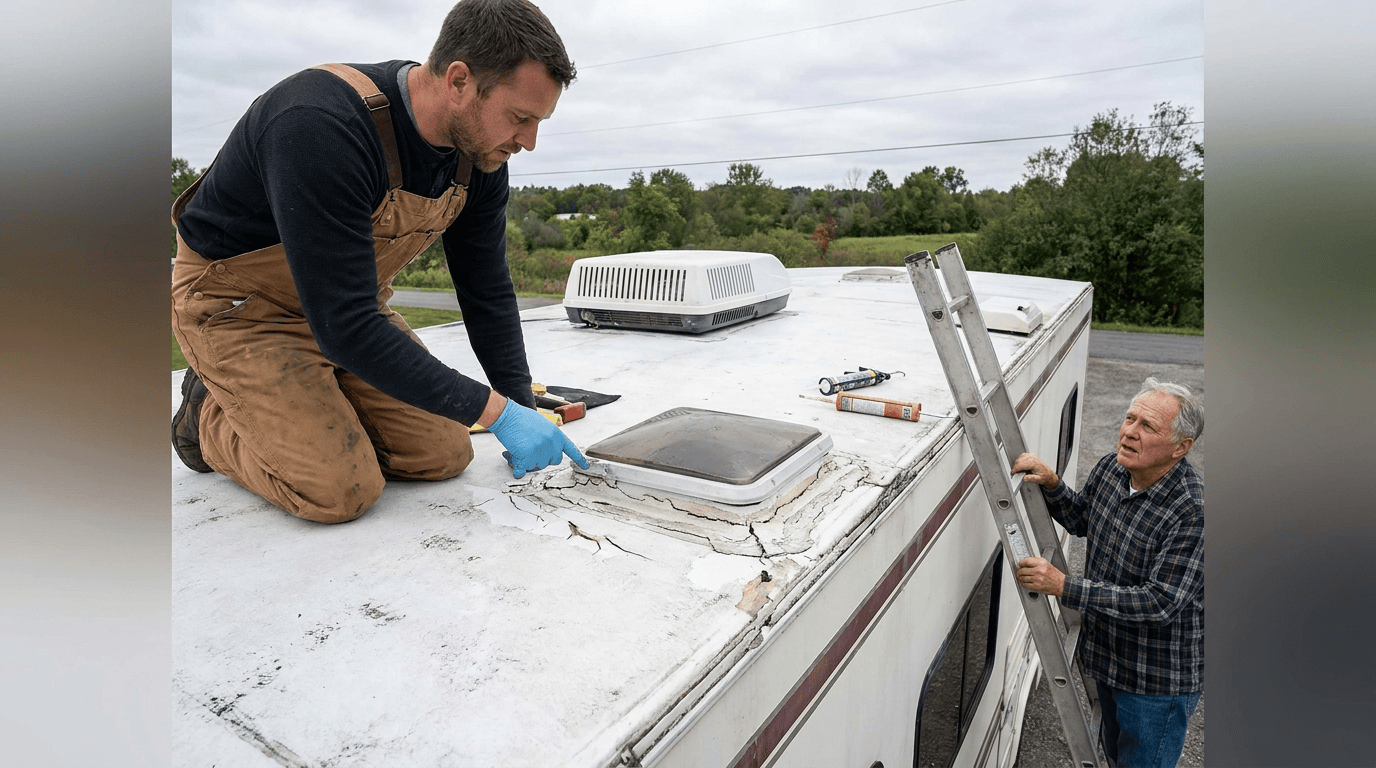
RV Roof Replacement Cost in 2026: Real Prices by Type and Size
$4,000 – $20,000″ typical range
2026 replacement cost range across all RV types and scope
3 main roof types | Labor is 50-70% of cost | Dealerships charge 30-70% more | Get 3+ estimates over $5,000
You get the estimate and stare at it. $13,000. $15,000. $18,000. Sometimes higher. For a roof. On a rig you paid $60,000 for.
RV roof replacement estimates are among the most sticker-shock-inducing quotes in RV ownership. Owners routinely post them to forums with variations of the same question: “Is this really what a roof costs? Am I being ripped off?”
The honest answer is complicated. Sometimes those quotes are legitimate — RV roof replacement genuinely can cost $15,000 for a large fifth wheel or Class A when decking replacement is required. Sometimes the quotes are inflated by dealerships adding labor hours that don’t exist. Sometimes the “replacement” quote is being pushed when a $2,000 repair would actually solve the problem.
This guide gives you the real 2026 numbers — what roof replacement actually costs by RV type, roof material, and scope of work. How to evaluate whether your specific quote is reasonable. When replacement is genuinely necessary versus when repair is the better move. And what to do if you’re staring at an estimate that feels wrong.
The Short Answer
RV roof replacement in 2026 falls into these ranges:
- Small travel trailer (18–25 ft), membrane-only replacement: $2,500 – $5,500
- Travel trailer or fifth wheel (25–35 ft), membrane-only: $4,000 – $8,500
- Large fifth wheel (35–45 ft), membrane-only: $6,000 – $11,000
- Class A motorhome (30–40 ft), membrane-only: $7,000 – $13,000
- Class A motorhome (40–45 ft), membrane-only: $9,000 – $16,000
- Add decking replacement: +$2,500 – $8,000+ depending on extent
- Fiberglass roof recoating or repair: $2,500 – $12,000
- Add fiberglass to fiberglass upgrade: $8,000 – $25,000+
Membrane-only means replacing the rubber (EPDM) or thermoplastic (TPO) roof material only, with the substrate (decking) underneath still in good condition. That’s the best-case scenario.
When water damage has extended into the decking, costs escalate rapidly. Full roof replacement with decking work often runs $10,000–$25,000+ depending on RV size and damage extent.
Why RV Roof Replacement Is Expensive
Understanding why roof work costs what it does helps you evaluate whether a quote is fair. Real cost drivers:
Labor is 50-70% of the total. RV roof work is genuinely labor-intensive. A crew has to remove all roof-mounted components (AC units, vents, antennas, skylights, solar panels), pull the old membrane, inspect and repair decking, install new membrane, reinstall components, and re-seal every penetration. That’s 20-50+ labor hours depending on RV size and complexity.
Materials cost less than you’d think. EPDM or TPO membrane material costs $200-$800 for a full RV roof. Sealants add another $150-$300. Fasteners, trim, and accessory materials another $200-$500. Total materials on a straightforward membrane replacement: $500-$1,500 typically.
Decking work is where costs explode. If the plywood or luan substrate under the membrane has water damage, that’s separate labor and separate materials. Cutting out and replacing decking on a portion of the roof is $1,500-$3,000. Full-roof decking replacement can add $5,000-$10,000+ to the job.
Component removal and reinstallation. Every AC unit, vent, antenna, and skylight has to come off and go back on. New seals for each. If any component is damaged during removal (common with older AC units), you may need replacements — adding $500-$2,000+.
Shop overhead vs. mobile work. Roof work usually requires a shop with covered space (weather-protected work environment). That overhead is built into shop labor rates. Some mobile techs can do smaller roof jobs on-site, typically at 15-30% lower cost than shops.
Dealership markup. Dealership service departments typically charge 30-70% more than independent shops for the same roof work. On a $10,000 job, that’s $3,000-$7,000 in dealership premium.
Fiberglass work is fundamentally different. Fiberglass roofs (common on Class A motorhomes and high-end fifth wheels) don’t have “membrane replacement” as an option. Repair means resin work, gel coat matching, and structural repair — more like boat work than membrane work. Labor rates for fiberglass specialists run higher.
Cost by Roof Type
Three main roof types dominate the RV market, and pricing differs significantly across them.
EPDM Rubber Membrane Roofs
The traditional RV standard. Black rubber that weathers to gray/white. Most common on travel trailers and fifth wheels built 2000-2020.
Full membrane replacement (materials + labor):
| RV Length | Cost Range |
|---|---|
| 18–25 ft | $2,500 – $5,500 |
| 25–30 ft | $3,800 – $7,000 |
| 30–35 ft | $5,000 – $8,500 |
| 35–40 ft | $6,500 – $10,500 |
| 40–45 ft | $8,000 – $13,000 |
EPDM is the most affordable membrane to replace because materials cost is lowest and installation is straightforward.
TPO Thermoplastic Roofs
Newer standard. White or light-colored, more UV-resistant than EPDM. Common on rigs built 2015 and later.
Full membrane replacement:
| RV Length | Cost Range |
|---|---|
| 18–25 ft | $3,000 – $6,000 |
| 25–30 ft | $4,200 – $7,800 |
| 30–35 ft | $5,500 – $9,500 |
| 35–40 ft | $7,000 – $12,000 |
| 40–45 ft | $8,500 – $14,000 |
TPO replacement runs slightly higher than EPDM due to more expensive material and welded-seam installation requirements. Some shops can’t work on TPO (welding equipment required); requires verifying capability before booking.
Fiberglass Roofs
Solid fiberglass shell with gel coat finish. Common on Class A motorhomes and high-end fifth wheels. Not “replaceable” in the membrane sense — repairs are structural fiberglass work.
Fiberglass roof work:
| Job | Cost Range |
|---|---|
| Small crack repair (under 12″) | $350 – $900 |
| Larger crack/damage repair | $800 – $2,500 |
| Section replacement (partial) | $2,500 – $6,000 |
| Full recoating (gel coat refinish) | $3,500 – $12,000 |
| Full fiberglass roof rebuild | $15,000 – $50,000+ |
Fiberglass roofs generally last the life of the RV if maintained. When they fail, repair is usually possible; full replacement is unusual.
Aluminum Panel Roofs
Older technology, some vintage rigs, some park models. Different repair approach — welding, rivet work, panel replacement.
Aluminum roof work:
| Job | Cost Range |
|---|---|
| Seam repair (per seam) | $250 – $600 |
| Panel replacement (single panel) | $800 – $2,500 |
| Multiple panel replacement | $2,500 – $8,000 |
| Full aluminum roof replacement | Rarely economical; typically $15,000+ |
Aluminum roof work requires specialized skills. Not every RV shop handles it — verify capability before booking.
Cost by RV Type
Same roof material, different RV types create different total costs due to size, complexity, and component count.
Travel Trailers (18-35 ft)
Most affordable category. Straightforward roof structures with fewer components.
| Job Scope | Cost Range |
|---|---|
| Membrane-only replacement (EPDM, 25-30 ft) | $3,800 – $7,000 |
| Membrane + partial decking | $6,000 – $10,000 |
| Complete replacement with decking | $8,000 – $14,000 |
| High-end fifth wheel (35-45 ft) full replacement | $10,000 – $18,000 |
Class B Camper Vans
Small roofs, simple structures. Usually a completely different roof type (integrated with vehicle body).
| Job Scope | Cost Range |
|---|---|
| Roof seal maintenance | $200 – $500 |
| Skylight or vent replacement | $400 – $1,200 |
| Complete roof work (rare) | $1,500 – $4,000 |
Class B roofs rarely need full replacement because they’re integrated with the van chassis. Most issues are component or seal-related.
Class C Motorhomes
Medium complexity. More components than travel trailers (typically two AC units, more vents).
| Job Scope | Cost Range |
|---|---|
| Membrane replacement (30-35 ft) | $5,500 – $9,500 |
| Membrane + partial decking | $8,000 – $13,000 |
| Complete replacement with decking | $11,000 – $17,000 |
Class A Motorhomes (Gas)
High complexity. Multiple ACs, more penetrations, more expensive components.
| Job Scope | Cost Range |
|---|---|
| Membrane replacement (30-40 ft) | $7,000 – $13,000 |
| Membrane + partial decking | $10,000 – $18,000 |
| Complete replacement with decking | $14,000 – $22,000 |
Class A Motorhomes (Diesel Pushers)
Highest complexity. Fiberglass roofs common at this class; premium labor rates; more expensive components.
| Job Scope | Cost Range |
|---|---|
| Fiberglass repair (spot) | $800 – $3,500 |
| Fiberglass recoat (partial) | $3,500 – $9,000 |
| Fiberglass full recoat | $8,000 – $15,000 |
| Full roof rebuild (rare) | $20,000 – $50,000+ |
Diesel pushers rarely need full “replacement” — fiberglass repair is usually possible. When full rebuild is needed, cost frequently exceeds the rig’s remaining value.
The Repair vs Replace Decision
Not every roof problem requires replacement. Understanding the real decision framework saves owners significant money.
Repair is the right move when:
- Damage is localized (under 4-6 square feet)
- Substrate underneath is intact and dry
- Failure is a specific component (sealant, single membrane tear, one damaged area)
- Roof is under 8 years old with otherwise good condition
- Cost estimate for repair is under 30% of full replacement cost
- No signs of interior water damage or delamination
Repair costs by scope:
| Repair Scope | Cost Range |
|---|---|
| Spot sealant re-application | $180 – $380 |
| Complete roof re-seal (no membrane work) | $480 – $1,100 |
| Small membrane patch (12″ x 12″ area) | $230 – $650 |
| Medium membrane repair (2-4 sq ft) | $650 – $1,800 |
| Large membrane repair with topper | $1,800 – $3,500 |
Replacement is the right move when:
- Damage spans significant portion of roof (25%+ of surface)
- Substrate has water damage (soft, spongy, or rotted decking)
- Membrane is age-failing (chalking heavily, cracking widely, delaminating)
- Multiple leak points active simultaneously
- Interior water damage visible below multiple areas
- Roof age exceeds 15 years with cumulative deterioration
- Repair cost approaches 50%+ of replacement cost
The 40% Rule. A useful rule of thumb: if repair cost exceeds 40% of replacement cost, replacement is usually the better long-term investment. You’ll get more remaining life from a fresh installation than from patched-together repairs.
What Actually Goes Into a Legitimate Roof Replacement Quote
Understanding what should appear in a real estimate helps you evaluate whether one is legitimate or inflated.
Labor breakdown (should be itemized):
- Component removal: 4–8 hours ($480-$1,600)
- Membrane removal and cleanup: 4–8 hours ($480-$1,600)
- Substrate inspection: 1–3 hours ($120-$600)
- Decking repair or replacement (if needed): variable
- Membrane installation: 6–12 hours ($720-$2,400)
- Component reinstallation with new seals: 4–8 hours ($480-$1,600)
- Sealant application: 2–4 hours ($240-$800)
- Total membrane replacement labor (no decking): typically 20–35 hours
At $120-$200/hour labor rate, that’s $2,400-$7,000 in pure labor for a straightforward membrane replacement.
Materials breakdown (should be itemized):
- EPDM/TPO membrane: $200-$800
- Adhesive: $150-$400
- Sealants (Dicor self-leveling, non-sag): $100-$300
- Component seals (AC gaskets, vent gaskets): $100-$400
- Miscellaneous (fasteners, tape, cleanup materials): $100-$300
- Total materials: $650-$2,200 for straightforward work
What should NOT appear:
- “Labor” as a single lump sum without breakdown
- Materials priced dramatically above retail (some markup is normal; 3-4x isn’t)
- “Contingency” or “possible additional work” without specifics
- Fees for basic tasks that should be included (cleanup, disposal)
- Charges for reinstalling components that shouldn’t be needed on new work
Legitimate additions that increase cost:
- Water damage discovered during work (documented and photographed)
- Decking replacement (should be added with clear scope)
- Component replacement if damaged during removal
- Upgraded materials (higher-grade membrane, better sealants)
The Dealership Markup Problem
One of the most consistent findings across RV forums: dealership roof replacement quotes routinely run 30-70% above independent shop quotes for identical work.
Real-world examples from owner reports:
- Grand Design fifth wheel roof replacement: $13,000 at General RV Tampa, $6,800 at independent shop with same scope
- Class A motorhome roof: $17,500 at Camping World, $9,900 at independent RV specialist
- Travel trailer roof: $11,000 at dealership, $4,800 at mobile-plus-shop combination
The dealership markup comes from several places:
- Retail parts markup: dealerships often mark parts 100-150% above wholesale; independent shops typically mark 30-60%
- Labor rate premium: dealerships often charge $175-$225/hour; independents typically $125-$175/hour
- Overhead absorption: dealership facilities and staffing costs are built into every quote
- Warranty department incentives: dealerships incentivized to maximize per-job revenue
- Sales-adjacent pricing: some dealership service departments quoted high to encourage rig trade-ins
The move: for any roof replacement quote over $8,000, get at least two independent shop estimates and one mobile tech consultation before authorizing. Real savings typically range from $2,000-$8,000+ depending on rig size and scope.
Regional Pricing Variations
Location affects roof replacement pricing significantly:
| Region | Typical Adjustment vs. National |
|---|---|
| Phoenix / Sunbelt Southwest | +10% to +20% (peak season +25%) |
| Florida / Southeast Coast | +15% to +25% |
| Pacific Northwest (rain-heavy) | +20% to +30% |
| California Coast | +25% to +40% |
| Northeast (labor costs high) | +20% to +30% |
| Midwest / Great Plains | -10% to -15% |
| Rural South | -15% to -25% |
| Mountain West | 0% to +10% |
Peak season pricing (November-April in snowbird markets, summer in northern markets) runs at the upper end of these ranges.
Insurance and Roof Replacement
Insurance coverage for roof work is one of the most confusing aspects of RV ownership. Here’s the real picture:
Usually covered:
- Hail damage (covered under comprehensive coverage in most policies)
- Wind damage or fallen branches
- Vandalism
- Fire damage
- Debris strikes during travel
- Collision-related roof damage
Usually NOT covered:
- Slow leaks from failed sealant (wear and tear)
- Age-related membrane failure
- Damage from missed maintenance
- Water damage from unsealed penetrations
- Manufacturing defects (warranty issue, not insurance)
The key threshold: if damage traces to a specific covered peril (storm, impact, fire), insurance typically pays. If damage traces to normal aging or maintenance neglect, insurance typically denies.
Documentation matters enormously. If your roof is damaged by hail:
- Document immediately with photos (before any repairs)
- Get timestamped weather reports for the storm event
- Get written estimates from independent shops before or alongside insurance adjuster visits
- Never accept the adjuster’s first payout without verification
- Get a second estimate if the initial insurance payment is inadequate
Owner-provided estimates vs. adjuster estimates. Insurance adjusters routinely quote 15-30% below what actual repair will cost. Providing your own written estimate from a qualified shop gives you negotiation leverage.
Money-Saving Strategies for Roof Replacement
Practical tactics to reduce roof replacement costs without compromising quality:
1. Get at least three estimates. For any job over $5,000, this is essential. Compare pricing, scope, and warranty terms across independent shops and mobile options.
2. Prioritize independent shops. Dealership pricing is dramatically higher for comparable work. Only use dealerships for specific manufacturer warranty situations.
3. Consider mobile-plus-shop hybrid. Some roof work can be handled by mobile techs at your location. Component removal, cleanup, and reinstallation can happen mobile-side; membrane installation might require shop access. Splitting the work sometimes reduces total cost.
4. Time your replacement. Winter and shoulder seasons (October-February) typically have better pricing than peak spring/summer. Some shops offer discounts during slower periods.
5. DIY the exterior sealant work. After professional membrane replacement, you can maintain the sealant work yourself indefinitely. This delays future replacement significantly.
6. Negotiate scope carefully. Not every roof job needs full replacement. Ask specifically what portion of the roof is compromised and whether partial replacement is viable.
7. Consider aftermarket membrane brands. Not all EPDM or TPO products are equal. Dicor, LaSalle Bristol, and other name brands cost more but often carry longer warranties.
8. Ask about warranty transfers. New roofs typically carry manufacturer warranties (materials warranty is separate from labor warranty). Understand what’s covered and for how long.
9. Bundle roof work with other repairs. If you need other repairs alongside roof work, some shops discount when combining jobs.
10. Consider the age question honestly. If your rig is 15+ years old with a $15,000 replacement quote, sometimes selling with disclosure and buying newer makes more financial sense than pouring money into roof work.
When to Walk Away from a Roof Replacement Quote
Certain patterns should end the conversation:
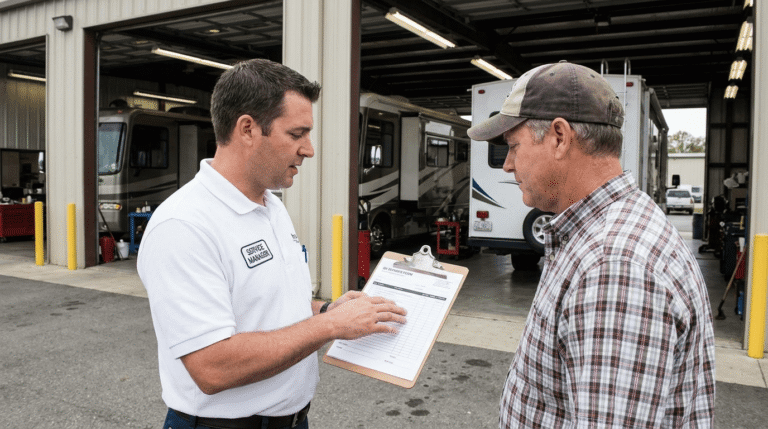
- Vague estimate without line items. Legitimate shops itemize labor and materials. Refusal to break down cost is a red flag.
- Pressure to authorize on the spot. Real estimates give you time to compare. Urgency tactics indicate inflated pricing.
- “While we’re in there” scope expansion. Legitimate work stays within scope unless documented water damage requires additional repair. Wide scope expansion suggests inflation.
- Refusal to warranty the work. Any shop confident in their labor offers minimum 1-year warranty. No warranty = no confidence.
- Estimate significantly above the 40% rule threshold. Replacement quote that exceeds 40% of your rig’s current value should be scrutinized carefully. Sometimes it’s warranted; sometimes it’s not economical.
- Multiple documented negative reviews. Some shops have chronic problems that show up in patterns across reviews and forums. Search their business name in RV Facebook groups and forums before committing.
What “Complete Replacement” Should Actually Include
For any quote you accept, verify it includes:
Materials:
- New membrane (EPDM or TPO, brand specified)
- All new sealants
- All new component gaskets (AC, vents, antennas)
- New trim and finish materials
- Any decking replacement materials (if applicable)
- Disposal of removed materials
Labor:
- Complete component removal
- Old membrane removal and substrate cleanup
- Substrate inspection with photos of any issues
- Decking replacement (if warranted)
- New membrane installation with proper adhesive application
- Complete component reinstallation with new seals
- All penetration sealing
- Final inspection and water testing
Warranty:
- Minimum 1-year labor warranty
- Materials warranty transferred from manufacturer
- Written warranty terms
Documentation:
- Line-item invoice showing parts, labor, and any additional work
- Photos of before and after
- List of materials used with model/brand information
- Warranty documentation
- Maintenance recommendations
Frequently Asked Questions
How much does it cost to replace an RV roof in 2026?
Ranges from $2,500 for a small travel trailer membrane-only replacement to $20,000+ for a large Class A with decking work. Most standard membrane replacements fall between $5,000-$12,000. See the detailed tables above for pricing by RV type and scope.
Is RV roof replacement covered by insurance?
Depends on the cause. Damage from hail, storm, wind, fire, vandalism, or collision is usually covered under comprehensive coverage. Wear-and-tear age-related failure or maintenance neglect is not covered. Document damage immediately if you suspect a covered peril.
Can I replace an RV roof myself?
Small repairs and sealant re-application are DIY-friendly. Complete membrane replacement typically isn’t — requires specialized tools, adhesives, and technique. DIY roof replacement often creates warranty issues and can lead to leaks if not done to specification. For most owners, professional replacement is the better move.
How long does an RV roof replacement take?
Depending on scope: 3-5 days for straightforward membrane-only work, 7-14 days when decking replacement is required. Weather delays can extend this significantly. Shop turnaround is typically 2-4 weeks from drop-off to pickup.
What’s the difference between EPDM and TPO roofing?
EPDM is rubber-based, flexible, forgiving to repair. TPO is thermoplastic, more UV-resistant, uses welded seams. Both work well; TPO is newer and increasingly common on 2015+ rigs. Cost is similar for replacement.
Should I upgrade from EPDM to TPO during replacement?
Depends on your rig and use pattern. TPO holds up slightly better in extreme sun exposure. EPDM is more forgiving of installation errors. If you’re paying for replacement anyway, the material upgrade is minimal cost and often worth it.
Can a mobile RV tech replace my roof?
Some smaller roof jobs (patch repair, membrane sections, sealant work) can be handled mobile. Complete membrane replacement typically requires shop access for weather protection during work. Ask specifically about the tech’s capabilities.
How can I tell if I need replacement vs repair?
Get a professional inspection from an NRVIA-certified inspector or an established mobile tech. They’ll evaluate substrate condition (dry vs damaged), extent of visible damage, and interior signs of water intrusion. Repair is usually the right move if substrate is intact and damage is localized.
How long should an RV roof last?
Well-maintained EPDM membranes typically last 10-20 years. TPO usually 15-25 years. Fiberglass can last the life of the rig with maintenance. Neglected roofs fail dramatically sooner — sometimes in 5-7 years.
What causes RV roofs to fail?
Failed sealant around roof penetrations is the #1 cause. UV exposure degrading membrane over time is #2. Missing regular maintenance is #3. Occasional issues from manufacturing defects, storm damage, or debris strikes account for the rest.
How much should I budget for roof maintenance annually?
$100-$300 annually for typical RV owners doing sealant refresh and semi-annual inspections. Compare to $5,000-$15,000+ replacement cost if maintenance is neglected. The ROI on regular maintenance is enormous.
Can I get financing for RV roof replacement?
Some larger repair shops offer financing through third-party lenders. Rates vary. For amounts under $10,000, often better to pay from savings or a personal loan than shop financing. For amounts over $10,000, dedicated RV repair financing sometimes makes sense.
What if my insurance quote is much lower than my repair estimate?
Common issue. Get a second written estimate from another qualified shop and provide it to your insurance adjuster. Most policies allow you to negotiate settlement based on actual repair costs. Some insurance disputes may require a third-party appraisal.
Should I get RV roof replacement done at a dealership?
Only if required by manufacturer warranty. Otherwise, independent shops typically charge 30-70% less for comparable work. The dealership premium doesn’t buy better quality — it buys higher overhead.
How do I find a qualified RV roof replacement shop?
Look for shops with specific roof replacement experience (not just general RV repair). Check reviews focused on roof work. Ask for photos of previous jobs. Verify they can work on your specific roof type (EPDM, TPO, fiberglass) and RV size. See our Mobile RV Repairman Guide for full vetting questions.
Bottom line: RV roof replacement pricing has enormous variance — $2,500 for a small travel trailer, $20,000+ for a large motorhome with decking work. Dealership quotes routinely run 30-70% above independent shops for identical work. Get three estimates for any job over $5,000. Verify what’s actually included in each quote. Consider whether repair beats replacement given your specific damage. And remember: aggressive semi-annual roof maintenance is the difference between a $200 sealant refresh and a $15,000 replacement. Prevention wins every time.
Need a roof replacement estimate?
Search the RV Repair Lab directory for Lab-Vetted shops and mobile techs that specialize in roof replacement. Filter by roof material type (EPDM, TPO, fiberglass), RV type, and independent vs dealership. Get real quotes from qualified pros.